Thomas & Friends: Go Go Thomas
- 4.4
- Rating
- 50.00M
- Installs
- Free
- Price
 Analysis by App-foxy
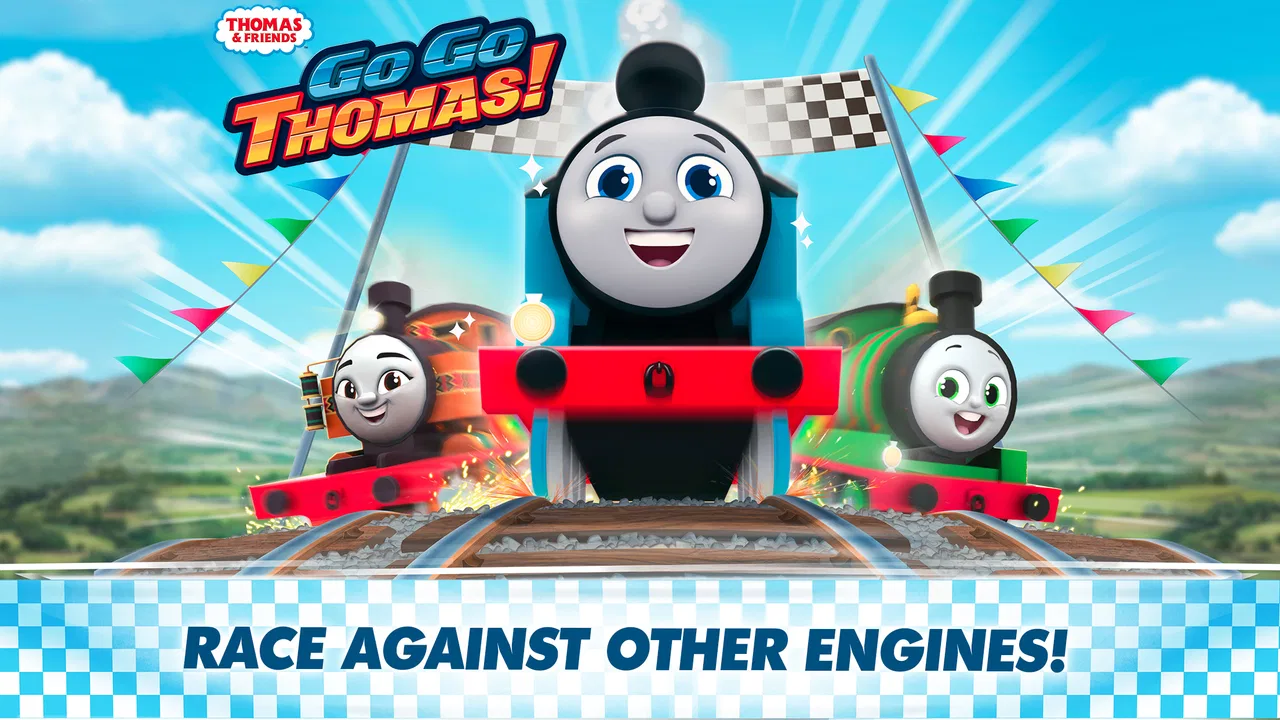
I spent time with Thomas & Friends: Go Go Thomas as a light racing game aimed at young children, and my first impression was clear: this is designed to make train racing feel approachable rather than intense. It comes from Budge Studios, is free to start, and carries an Everyone age rating, so it is easy for a parent to consider for a shared tablet or phone. The central appeal is simple enough for children from the preschool and early-school range: choose a familiar engine, race, and enjoy the bright Thomas & Friends setting.
That simplicity is both its strongest quality and its main limitation. I would recommend it to a child who enjoys Thomas, short play sessions, and uncomplicated racing. I would not choose it for an older child looking for realistic driving, deep vehicle tuning, or a serious multiplayer contest. The important question is not whether it is a full racing simulation—it clearly is not—but whether its gentle format gives a child something enjoyable to do without turning every session into a spending decision.
How the racing experience works for young players
The game sits in the racing category, but it approaches racing differently from the usual car games. Instead of expecting a child to understand braking points, steering sensitivity, gear changes, or complicated menus, it keeps the idea of a race close to the world children already know from Thomas & Friends. That makes it a natural fit for a child who wants to control engines rather than drive sports cars.
You May Also Like

 Blood Strike: 2.5 Anniversary
Blood Strike’s Loadouts Turn Every Drop Into a Tactical Gamble
A close look at Blood Strike’s custom loadouts: how fast access to signature weapons reshapes its battle royale rhythm, rewards preparation, and narrows the gap between fights.

 Pandora - Music & Podcasts
Pandora’s Music Is Easy to Start, but Harder to Recover
Pandora’s strength is its low-effort path from a seed to a station. Its weak spot is how much confidence it asks you to place in connection, setup, and quiet recovery.

 8 Ball Pool
 Is Built on Rivalries, Rematches, and Routine
A close look at the rivalries, rematches, shared routines, and unanswered safety questions that turn a quick pool match into a persistent mobile community.

 Samsung Music
’s Quiet Strength Is Playing What You Already Own
Its reach comes less from spectacle than from dependable access to a personal library. That simplicity is both the app’s strongest retention engine and its ceiling.

 AccuWeather: Weather Radar
AccuWeather Review: A Quick, Clear Forecast for Everyday Decisions
For everyday plans, the best forecast is the one you can understand quickly. AccuWeather makes rain timing, radar, and local conditions easy to act on, with a few trade-offs.

 Hill Climb Racing
Why Hill Climb Racing Still Turns Crashes Into One More Run
A tiny car, a bumpy hill and one more upgrade: Hill Climb Racing keeps resurfacing because its simple chaos makes every near-miss feel personal.
More From Our News Desk



In everyday use, I can imagine a parent handing over a phone during a short wait at a restaurant or while travelling. A child can play for a little while without needing a long explanation about realistic racing rules. The recognizable characters and train theme do much of the work: even before a child understands every control, the setting gives the activity an immediate purpose.
That does not mean every child will react in the same way. Children who enjoy collecting, unlocking, and gradually improving a favorite character may stay interested longer than children who only want constant action. The best experience comes when the child likes the Thomas universe itself, because the theme is not just decoration; it is the reason this particular racing game stands out from a large field of generic racers.
Controls that suit a first racing game
My practical advice is to let the child try the first race while an adult watches nearby. Young players often understand the goal quickly but may still need help recognizing buttons, choosing a character, or returning to the main screen. Once that initial orientation is done, the game is more suitable for independent short sessions than a complex racing title would be.
A useful approach is to treat the first few plays as an introduction to digital games rather than a test of skill. Ask the child which engine they like, let them make the choice, and then talk about what happened in the race. This turns the app into a small shared activity instead of simply placing a screen in front of them. It also helps reveal whether the child enjoys racing itself or is mainly interested in the characters.
For parents, the low barrier to entry is valuable. There is less risk of a child becoming frustrated because the game demands advanced timing or precise driving. The trade-off is that an experienced young gamer may find the controls too gentle after the novelty of the trains wears off. Compared with a conventional kart racer, this is better as a first step than as a long-term replacement.
Progress without making the child feel rushed
One thing I pay attention to in children’s games is whether progress feels like encouragement or pressure. A racing game can be enjoyable when a child wants to try again, but it becomes tiring when every loss feels like a demand to buy something or repeat the same task endlessly. With this title, I would keep the focus on the race itself and avoid presenting it as a game that must be completed or mastered.
Parents can make a simple routine work well: allow a few races, then stop while the child is still having fun. That is especially useful with younger players, who may not notice how long they have been playing. The game’s short, accessible format suits this approach better than a large open-world racing game that encourages much longer sessions.
Another practical tip is to use the app as a choice-based activity. Rather than promising a reward for winning, ask the child to select an engine and explain why. This gives the child ownership even when the result is not a victory. It also reduces the pressure that can appear when a child believes they must win every race to enjoy the game.
Free access, purchases, and the question of fairness
The game is free to download, while its listed in-app purchases range from $0.99 to $19.99 per item. That is the part I would discuss with a parent before allowing unsupervised play. The free entry makes it easy to test the basic experience, but the presence of optional paid items means the device should be set up carefully before a child starts tapping through menus.
I would not describe the purchase model as automatically unfair simply because purchases exist. The more useful question is how the child experiences the free portion and whether paid options become a source of pressure. Since the available purchase information gives the price range but does not establish how each item affects racing, I would avoid promising that spending is necessary, or claiming that it has no effect. A parent should inspect the purchase screens personally and decide what fits the family’s rules.
The safest workflow is straightforward. Before handing over the device, an adult should review the store account settings, use purchase authentication, and explain that buttons showing a price are not part of the free play session. On a shared family device, this matters even more because a child may be only one tap away from an account confirmation screen. I would also make it clear that choosing a free option is a normal part of the game, not a punishment.
For a child who is easily disappointed by locked content, the free experience may feel less satisfying if paid choices are shown prominently. For a child who is happy to race with available engines and does not care about owning everything, the free starting point may be enough. That difference is more important than the headline price. Two children can use the same app and have completely different reactions to the same purchase menu.
Is the racing competitive in a fair way?
I see this primarily as a personal and family-friendly racing experience, not as a serious competitive platform. I would not compare it directly with racing games built around online rankings, detailed car statistics, or head-to-head competition between experienced players. Those games usually demand more time, more precision, and a stronger tolerance for losing.
For a young child, fairness often means something simpler: the controls should be understandable, the goal should be visible, and losing should not make the game feel broken. A child should be able to try again without an adult needing to explain complicated systems. That is where the Thomas theme and accessible presentation are likely to help.
At the same time, parents should not assume that a child’s progress automatically represents equal skill in every situation. Familiar characters can influence which engine a child chooses, and any paid options may affect how the child views the available choices. Because the confirmed purchase details do not explain the competitive impact of individual items, I would judge fairness by observing the actual play session rather than making a broad claim about the whole system.
A good test is to watch whether the child talks more about racing or about obtaining something unavailable. If the conversation stays focused on choosing engines and enjoying the course, the spending element is probably not dominating the experience. If the child repeatedly asks for a purchase after losing, I would pause the game and review the menus together. That is not an accusation against the game; it is a sensible response to how children interact with free-to-start apps.
What parents should check before downloading
The game was released on February 24, 2015, and its current version is 2025.3.2. It supports devices running Android 5.1 or later. Those details make compatibility worth checking on an older family phone or tablet before planning a trip around it. A device that technically meets the minimum may still offer a different experience from a newer one, so I would install and test it at home first.
The app has a 4.3 average from around 226 thousand ratings, with more than 3 thousand written reviews, and it has passed 50 million installs. Those figures suggest that it has reached a large audience, but they should be treated as context rather than a guarantee that every child will enjoy it. A popular children’s game can still be a poor match for a child who wants fast, demanding competition or who dislikes train characters.
The Everyone rating is reassuring for its intended family audience, but an age label does not replace supervision. Parents still need to consider screen-time limits, account controls, and whether the child understands paid buttons. I also prefer to try a game myself before giving it to a child, especially when the app combines free access with in-app purchases.
Where it beats the usual alternatives
Against a typical car-racing game, this title has a clear advantage for children who already know Thomas & Friends. The theme gives the race emotional meaning: selecting an engine can be more exciting than selecting an anonymous vehicle. That familiarity can help a hesitant child engage with a racing game for the first time.
Against a more advanced kart racer, it is easier to introduce and less intimidating. A preschool child does not need to learn a complicated vehicle setup before enjoying the basic idea of moving through a race. I would choose it for a younger player who wants recognizable characters and a gentle first experience.
Against a non-racing Thomas app, it offers a more active reason to return. The child is not only watching or exploring the characters; they are making choices and participating in a contest. That can be useful when a parent wants a game with a clear activity rather than a passive video experience.
The reverse is also true. If the child wants detailed tracks, realistic speed management, extensive customization, or a demanding sense of mastery, a dedicated racing game will probably be the better choice. If the child mainly wants stories and character interaction, a Thomas game outside the racing category may fit better. The right alternative depends on what the child is actually seeking, not simply on the fact that both apps involve trains or vehicles.
Small habits that improve the experience
I found three habits especially useful for this kind of app. First, create a clear “free play” rule before the child starts: races are fine, but purchases require an adult. This is easier for a young player to understand than a long explanation about accounts and billing.
Second, keep the device in a shared space during the first sessions. That lets a parent see whether the child can manage the controls, whether the pace is comfortable, and whether paid content is becoming a distraction. It also makes it easier to stop at a natural point rather than interrupting a frustrated child halfway through a race.
Third, compare the child’s interest after several short sessions rather than judging the game from one excited first play. Thomas fans may enjoy the initial character recognition, while the longer-term question is whether the racing itself remains fun. If the child keeps choosing races without asking for extras, the app is doing its job. If interest disappears once the novelty fades, there is no reason to push it as a daily game.
There are also situations where I would skip it. I would not select it for a child who becomes upset by losing, for a family that wants a completely purchase-free environment, or for an older player who expects sophisticated racing mechanics. I would also look elsewhere if the main goal is cooperative play with friends, because this is not the title I would choose when social competition is the deciding factor.
My trust verdict for families
My overall view is positive but deliberately limited. This is a sensible free starting point for a young Thomas fan who wants simple racing, and Budge Studios has positioned it in a way that is easy for families to understand. The Everyone rating, broad device support from Android 5.1 onward, and large install base make it a practical candidate for a test download, while the 4.3 average gives it a generally favorable reception.
I would still treat the purchase system as part of the review, not a footnote. The listed item prices run from $0.99 to $19.99, and the available information does not establish how each purchase changes play. That means my recommendation comes with a clear condition: an adult should check the purchase flow and set account protections before a child uses the app alone.
For the right child, the game works because it combines a familiar world with a manageable racing activity. It is best used in short sessions, with expectations set around enjoyment rather than winning or collecting everything. I would recommend it to families who want an approachable train-themed racer and are comfortable supervising a free-to-start game.
If you are looking for a deep racing challenge, a completely purchase-free experience, or a strong competitive mode, I would choose another option. But if your child lights up at the sight of Thomas and wants to race engines without dealing with complicated controls, Thomas & Friends: Go Go Thomas is a reasonable, easygoing choice. My strongest recommendation is to try the free experience together first, watch how your child responds to the racing and the purchase prompts, and then decide whether it deserves a regular place on the device.
FAQs for Thomas & Friends: Go Go Thomas
01What platforms is Thomas & Friends: Go Go Thomas available on?
Thomas & Friends: Go Go Thomas is available for both Android and iOS devices. You can download it from the Google Play Store or the Apple App Store. The game offers an engaging experience for children, allowing them to race with their favorite Thomas & Friends characters.
02Is Thomas & Friends: Go Go Thomas suitable for young children?
Yes, the game is designed with young children in mind. It features simple controls and colorful graphics that are appealing to kids. The content is child-friendly, focusing on fun races and interactive play with beloved characters from the Thomas & Friends series.
03Does Thomas & Friends: Go Go Thomas require an internet connection to play?
While Thomas & Friends: Go Go Thomas can be played offline, some features may require an internet connection. For example, accessing updates or additional content might need connectivity. However, the core racing experience is accessible without an internet connection.
04Are there in-app purchases in Thomas & Friends: Go Go Thomas?
Yes, the game includes in-app purchases. These can be used to unlock additional characters, tracks, or other features. It's essential for parents to be aware of this and manage in-app purchase settings to prevent unauthorized spending by children.
05What age group is Thomas & Friends: Go Go Thomas suitable for?
Thomas & Friends: Go Go Thomas is primarily targeted at children aged 3 to 7 years old. It provides an engaging and educational experience, encouraging motor skills and strategic thinking through racing challenges. Parents can feel confident that the game is appropriate for this age group.
Pros
- Colorful and engaging graphics.
- Easy controls for young players.
- Exciting races with different characters.
- Educational value with problem-solving skills.
- Regular updates with new content.
Cons
- In-app purchases can be pricey.
- Ads might interrupt gameplay.
- Limited free content initially.
- Requires internet for some features.
- Can be repetitive over time.

Thomas & Friends: Go Go Thomas
Gallery